

Shri Samrat ChoudharyHon'ble Chief Minister

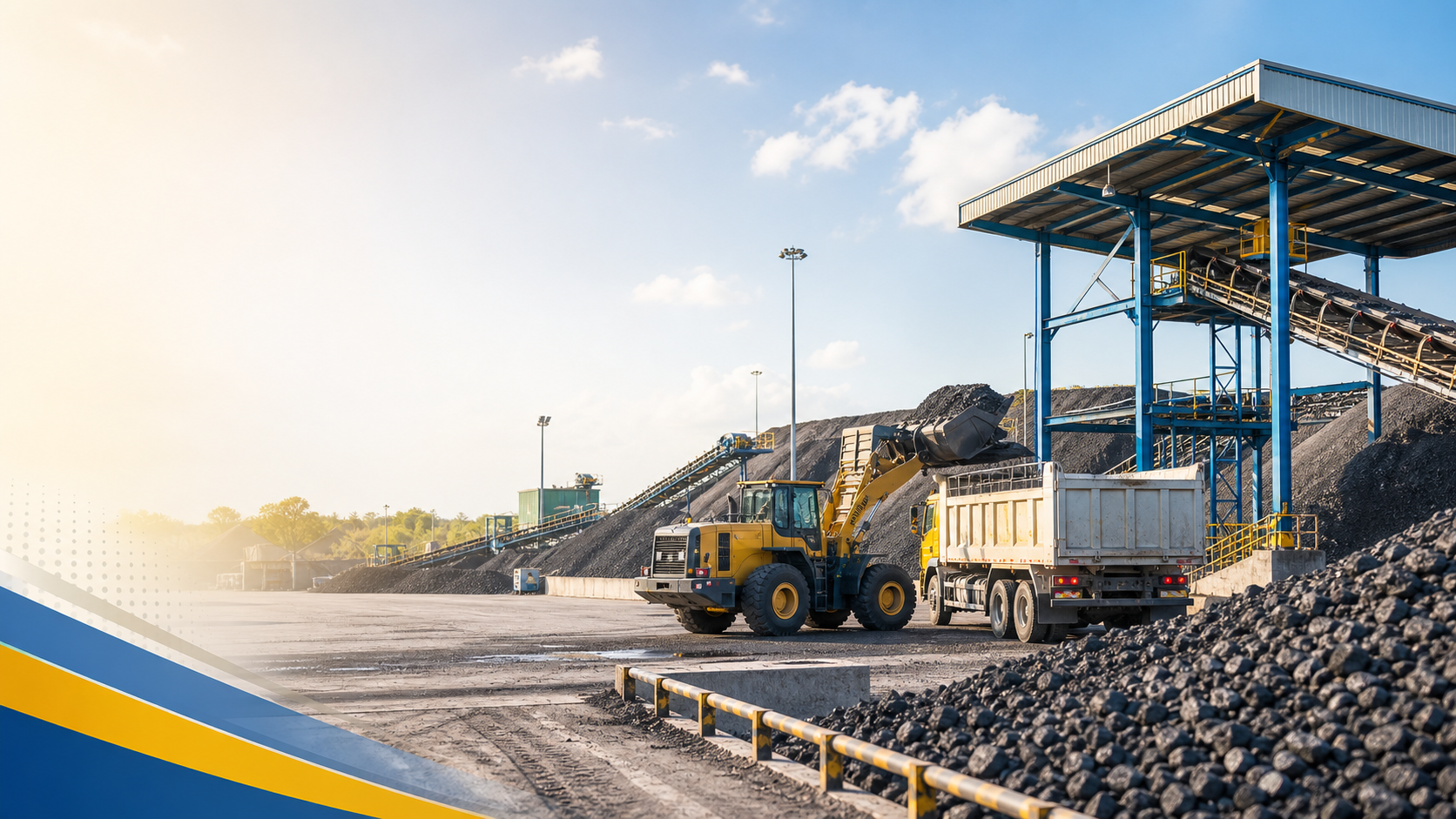
About Coal
BSMCL groups coal distribution guidance, consumer registration routes, forms, quarterly allocation records, and official portal access in one public service page.
Overview
Coal is a fossil fuel. It is a combustible, sedimentary, organic rock, which is composed mainly of carbon, hydrogen and oxygen. It is formed from vegetation, which has been consolidated between other rock strata and altered by the combined effects of pressure and heat over millions of years to form coal seams.
The coal deposits in India are primarily concentrated in the Gondwana sediments occurring mainly in the eastern and central parts of Peninsular India, although Gondwana coal deposits also occur in the north-eastern part of the country mainly in Assam and Sikkim. The Tertiary coal-bearing sediments are found in Assam, Arunachal Pradesh, Nagaland and Meghalaya.
As of now there is no coal mine in Bihar, but a coal block has been allocated to BCCL (subsidiary of CIL) in Bhagalpur and the process has been initiated to start the mine, though it will take up to 2–3 years to start coal production.
Coal consumers in the state are dependent on coal suppliers of other states. In order to eliminate dependency on handling agents, the Company has signed an agreement with a Project Management Consultant (PMC) to facilitate coal distribution in the state.
With the help of the PMC, digitization of coal distribution will benefit MSMEs and other consumers significantly, making the process transparent and efficient. The platform developed by the PMC will make it easy for the Company to manage coal distribution and eliminate dependency on handling agents.
Coal map
The map shows coal distribution coordination, consumer support districts, industrial demand areas, and service coverage.
Map data will appear after CMS records are published.
View coal formsCoal types
Expand each coal type to review its key behavior, industry usage, and public reference context.
These coals, when heated in the absence of air, form coherent beads, free from volatiles, with strong and porous mass, called coke.
These coals, when heated in the absence of air, form coherent beads not strong enough to be directly fed into the blast furnace. Such coals are blended with coking coal in adequate proportion to make coke.
These are coals without coking properties.
These coals have undergone the process of coal washing or coal beneficiation, resulting in value addition of coal due to reduction in ash percentage.
Middlings are by-products of the three stage coal washing / beneficiation process, as a fraction of feed raw coal.
Rejects are the products of coal beneficiation process after separation of cleans and / or middlings, as a fraction of feed raw coal.
CIL Coke / LTC Coke is a smokeless, environment friendly product of the Dankuni Coal Complex, obtained through low temperature carbonisation.
These are the screened fractions of feed raw coal and LTC coke / CIL Coke respectively, obtained from the Dankuni Coal Complex and other coke oven plants.
These are products from Dankuni Coal Complex using low temperature carbonisation of non-coking coal in vertical retorts.
Reference
Coking and semi-coking grades are defined by ash content; non-coking grades are defined by Gross Calorific Value (GCV), measured in kcal/kg.
| Grade | Ash content |
|---|---|
| Steel Grade - I | Not exceeding 15% |
| Steel Grade - II | Exceeding 15% but not exceeding 18% |
| Washery Grade - I | Exceeding 18% but not exceeding 21% |
| Washery Grade - II | Exceeding 21% but not exceeding 24% |
| Washery Grade - III | Exceeding 24% but not exceeding 28% |
| Washery Grade - IV | Exceeding 28% but not exceeding 35% |
| Washery Grade - V | Exceeding 35% but not exceeding 42% |
| Washery Grade - VI | Exceeding 42% but not exceeding 49% |
| Grade | Ash content |
|---|---|
| Semi Coking Grade - I | Not exceeding 19% |
| Semi Coking Grade - II | Exceeding 19% but not exceeding 24% |
| GCV (kcal/kg) | Grade |
|---|---|
| Exceeding 7000 | G-1 |
| Exceeding 6700 and not exceeding 7000 | G-2 |
| Exceeding 6400 and not exceeding 6700 | G-3 |
| Exceeding 6100 and not exceeding 6400 | G-4 |
| Exceeding 5800 and not exceeding 6100 | G-5 |
| Exceeding 5500 and not exceeding 5800 | G-6 |
| Exceeding 5200 and not exceeding 5500 | G-7 |
| Exceeding 4900 and not exceeding 5200 | G-8 |
| Exceeding 4600 and not exceeding 4900 | G-9 |
| Exceeding 4300 and not exceeding 4600 | G-10 |
| Exceeding 4000 and not exceeding 4300 | G-11 |
| Exceeding 3700 and not exceeding 4000 | G-12 |
| Exceeding 3400 and not exceeding 3700 | G-13 |
| Exceeding 3100 and not exceeding 3400 | G-14 |
| Exceeding 2800 and not exceeding 3100 | G-15 |
| Exceeding 2500 and not exceeding 2800 | G-16 |
| Exceeding 2200 and not exceeding 2500 | G-17 |